
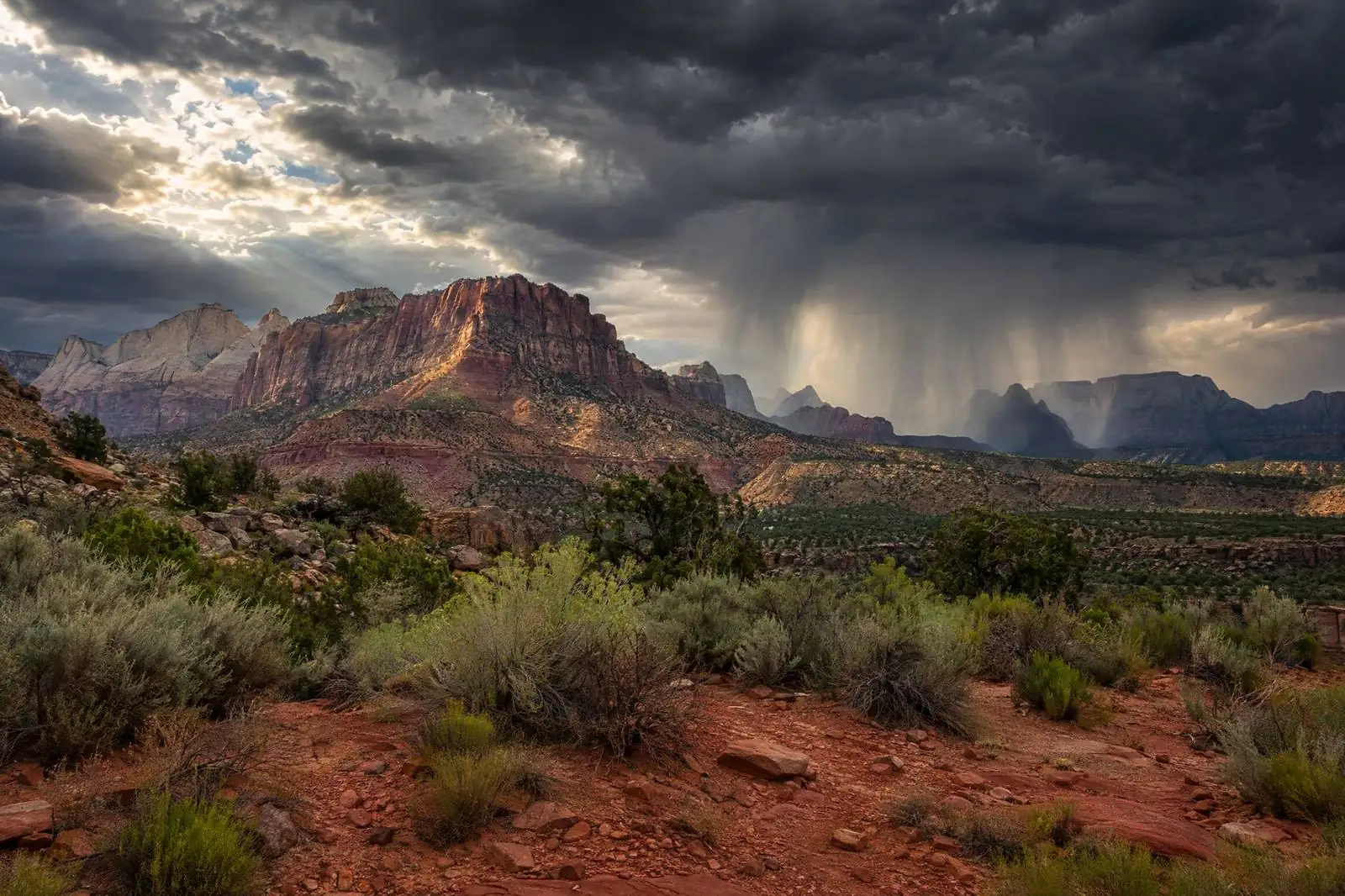
One Park, Several Climates
Zion is often described as one place, but the weather you get depends on where you stand. The canyon floor sits around 4,000 feet, the mesas around it rise higher, and the high country tops out well above that. Temperatures drop roughly 10°F for every 1,000 feet of elevation, so a cool morning in Springdale can be a cold one on the rim.
Plan for the elevation you will actually be at, not the number on your weather app for the nearest town.
That gap is easy to underestimate. A family that packs for Springdale and then drives to a trailhead at 6,500 feet will be cold, and a hiker who dresses for the rim will overheat in the canyon by noon.
A simple rule: pack for the coolest place you will stand that day, then carry a layer you can shed. The car makes that easy; a backpack makes it easier.
Spring: Snowmelt and Wind
Spring arrives unevenly. March can still bring snow to the high country while the canyon floor is warm enough for a T-shirt. Snowmelt swells the Virgin River, which can close The Narrows, and afternoon winds are common.
Wildflowers appear as the ground warms, starting low and moving uphill through April and May. Carry a shell, expect changing conditions, and check river levels before committing to a slot canyon hike.
Wind is the other spring constant. It builds in the afternoon and can make an exposed overlook uncomfortable, so plan the high viewpoints for the morning.
Spring storms also bring wind-driven dust. If you wear contact lenses, pack drops and a spare pair of glasses.
Summer: Heat and Monsoon
Summer is the season that catches visitors off guard. Highs in Zion Canyon commonly exceed 100°F, and the heat reflects off the sandstone. Start hikes at first light, carry more water than you think you need, and save the exposed trails for evening.
Monsoon season runs July through September. Storms build in the afternoon and can drop a lot of rain in a short time, which makes flash flooding the main hazard of the season. The park closes trails and canyons when the risk is high. If you are visiting then, plan a backup that keeps you off exposed rock, such as a guided drive on the mesas.
Water is the other half of the summer plan. Drink before you are thirsty, and turn around early rather than pushing a hike in the heat.
The shuttle helps here. Riding between stops gives you shade and water without ending the day, and the canyon walls block the worst of the afternoon sun.
If the forecast mentions thunderstorms, change the plan rather than the start time. Storms here arrive fast and leave the same way.
Fall: The Steadiest Season
Fall is the most predictable season. The monsoon fades, daytime temperatures drop into a comfortable range, and the cottonwoods turn gold along the river. Mornings are cool, afternoons are mild, and the light gets long and warm.
Crowds thin after Labor Day but return on fall weekends. Book shuttle-dependent plans and any guided tour ahead if you are traveling in October.
It is also the best season for combining a canyon morning with a mesa afternoon, because the temperature range is wide enough to keep both comfortable.
Fall evenings cool quickly once the sun drops behind the west rim, so a light jacket earns its place even on a warm day.
Winter: Cold Mornings, Clear Skies
Winter is quiet. The canyon floor often stays clear while snow covers the mesas and higher ground. Days are short, mornings are cold, and icy patches can linger on shaded trails.
The upside is space. You can walk into the canyon without the summer queue, and the low sun makes the cliffs glow for hours. Bring warm layers, boots with grip and traction devices if you plan to hike.
Snow chains are rarely needed in town, but the highway over the pass can be icy after a storm. Check road conditions before driving east.
Winter also brings the clearest air of the year. Photographers who visit in January often get views that summer haze hides.
Packing for Any Forecast
Whatever season you choose, a few items cover most situations.
- Layers: a base layer, a warm mid-layer and a shell
- Water: at least a liter per hour of hiking in heat
- Sun protection: hat, sunglasses and high-SPF sunscreen
- Footwear: grippy shoes, plus traction spikes in winter
- A small daypack for the layers you shed at midday
Guides on our tours carry cold water, first-aid kits and blankets in every vehicle, which covers the basics while you focus on the view.
Keep a spare pair of socks in the car. Wet feet from a stream crossing or a snowbank end more hikes than cold weather does.
Frequently asked questions
How hot does it get in Zion in summer?
Highs in Zion Canyon commonly exceed 100°F in summer. Hike early, carry extra water and plan shaded or vehicle-based activities for the afternoon.
When is monsoon season in Zion?
Monsoon season runs July through September, bringing afternoon storms and flash-flood risk. The park closes narrow canyons and some trails when the danger is high.
What is the best season to visit Zion?
Spring and fall offer the most comfortable temperatures. Summer is hot and storm-prone, while winter is quiet and cold with snow on the high ground.