
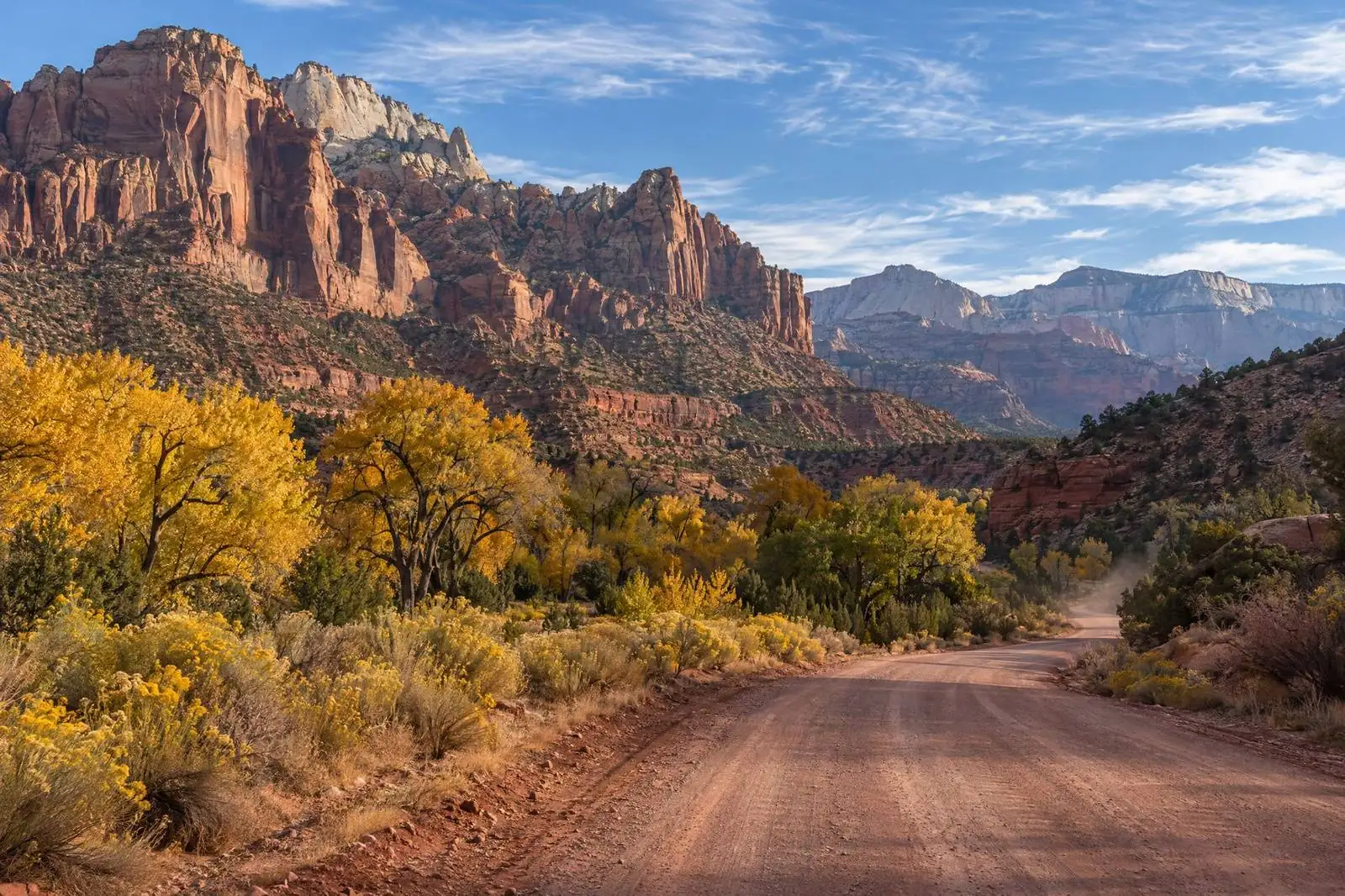
Why the Desert Blooms in April
Most of the year, the high desert around Zion looks tan and gray. Then April arrives. Winter moisture that soaked into the soil in January and February, combined with longer days and warming air, triggers one of the shortest and most colorful seasons in the Southwest.
The bloom is not guaranteed. It depends on how much rain and snow fell over the winter and how quickly spring warms up. A dry winter means a thin show; a wet one can turn roadsides, mesa tops and riverbanks green almost overnight.
The bloom also moves quickly. A slope that is green one week can be dry the next, so visitors who can be flexible should watch local reports and go when the color is actually there.
Local wisdom helps. Ask at a gear shop in Springdale which slopes are showing color, or call us; guides see the mesa roads most days.
Where to Find Flowers Near Zion
Start low. The Virgin River corridor through Springdale, Rockville and Virgin is the most reliable place to see spring color, because water is close to the surface. Cottonwoods leaf out in soft green, willows green up along the banks, and wildflowers appear on the shoulders of SR-9.
Inside the park, the Pa'rus Trail follows the river from the south entrance and is flat enough for anyone. The Canyon Overlook Trail and the Zion–Mount Carmel Highway put you higher, where the bloom comes later and the plants are smaller and tougher. Look for cactus flowers, desert marigold and globemallow on south-facing slopes that warm first.
Do not pick. Desert plants grow slowly, and a picked flower may be the only seed source on that slope for years. Photograph it instead, and stay on established trails so the fragile soil crust stays intact.
Bring a hand lens or use your phone's close-up mode. The smallest flowers, like phacelia and paintbrush, are often the most interesting.
Elevation Sets the Calendar
Spring climbs uphill slowly. A flower that is finished at 4,000 feet may still be opening at 6,000, and temperatures drop roughly 10°F for every 1,000 feet of elevation. That is why a single April week can offer a different bloom on every drive.
It also means you should not chase a single peak. Follow the green line upward: start in the valley, then move to the mesas and higher roads as the weeks pass. Late April and early May often bring the best combination of color and comfortable heat.
If you are chasing color, the Zion–Mount Carmel Highway is a good barometer. Drive it in the morning and you will see which elevation is currently in bloom.
Higher ground also stays cooler longer, so a late bloom can last into May on the north-facing slopes above the highway.
April Weather and What to Wear
April days are usually warm, but mornings are cool and the wind picks up most afternoons. Snowmelt from the high country keeps the Virgin River running high, which can close The Narrows in spring. Check river conditions before you plan that hike.
Dress in layers and bring a windproof shell. Sunscreen matters more than people expect at this altitude; the dry air and bright light burn skin quickly. A hat and sunglasses are worth the space in your pack, and so is a camera with a macro setting.
April can also bring a late cold snap. A storm rolling through the high country can drop temperatures twenty degrees in an afternoon, which is another reason to keep a warm layer in the vehicle.
If you are hiking with kids, April is a good month for it. The trails are dry, the days are long enough for a picnic and the heat has not arrived.
Blooms on the Mesas
Some of the best spring color is outside the park. On Smith Mesa and Hurricane Mesa, the open ground turns green in April, cactus and shrubs flower along the ranch roads, and the views back toward Zion are clear and wide. Wildlife is active too: deer, rabbits and birds move through the brush in the cool hours.
The Mesa Vista Group Zion Safari Tour climbs both mesas in 2.5 hours and looks east at the 3,000-foot cliffs of Zion. If you would rather set your own pace, a private tour lets you stop for photos whenever something blooms.
Spring is also when the ranch country wakes up. Cattle return to some pastures, birds nest in the junipers, and the smell of wet sage follows a passing shower.
After a wet winter, the mesa roads can stay muddy longer than the valley. That is one reason a guided trip is easier than driving yourself.
Frequently asked questions
When do wildflowers bloom near Zion?
Wildflowers usually appear from March through May, with the valley blooming first and higher ground later. April is the most reliable month for color along the Virgin River and on the surrounding mesas.
What flowers can I see in April?
Look for desert marigold, globemallow and cactus blossoms on south-facing slopes, along with fresh green cottonwoods and willows along the river. What appears depends on how much moisture fell over the winter.
Can I see spring flowers on a jeep tour?
Yes. The mesa roads outside the park green up in April and often show cactus and shrub blooms. Tours run on Smith Mesa, Hurricane Mesa and the Outback south of the park, not inside it.