The Mesas Keep Their Own Calendar
Zion Canyon gets most of the attention, but the country around it has its own seasons. Smith Mesa and Hurricane Mesa sit higher than the valley floor, so they green up later, dry out faster and catch snow earlier. The Outback at the park's south end runs lower and warmer, with ranch roads and open range.
That difference is why a jeep tour looks different every month. Same roads, different light, different ground.
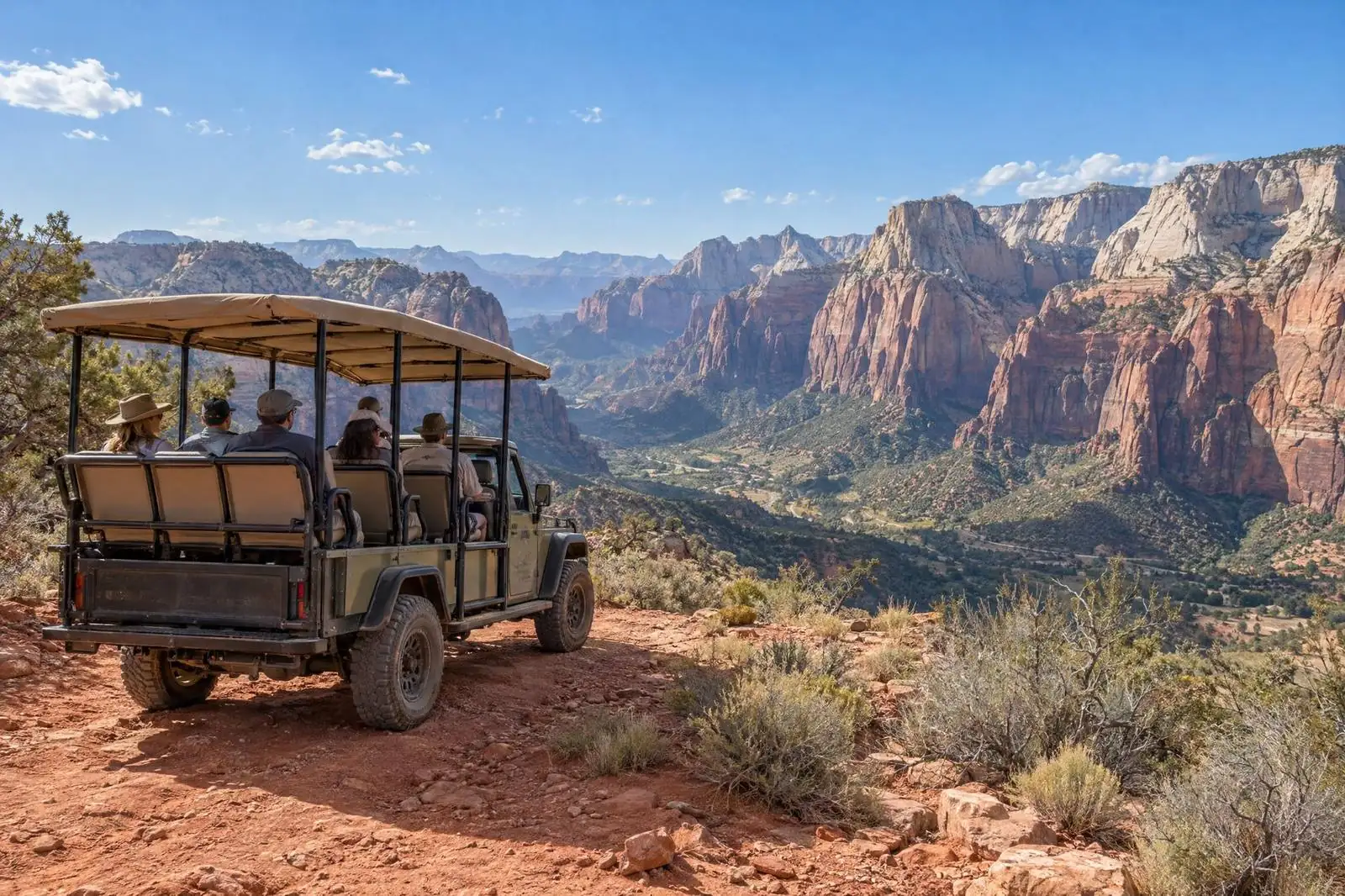
Elevation also changes what you see. From the mesa tops you look across at the cliffs rather than up at them, and the scale of the park becomes clearer than it does from the canyon floor.
The route matters too. Mesa Vista looks east at the cliffs; the Outback looks north across open range toward the park's south end.
The Arizona Strip, south of the park, runs lower still and stays warm longer than either mesa.
Spring on the Mesa
Spring starts with water. Snowmelt and rain bring the mesa grass up fast, and by April the ground is green enough to look like a different state. Cactus and shrubs flower along the roads, and deer and rabbits move through the brush in the cool hours.
The views back toward Zion are clearest in spring, before summer haze builds. Bring a jacket for the morning and sunscreen for the afternoon.
Spring is a good season for the Outback too. The lower country greens up early, and the ranch roads dry out faster than the high mesa roads.
Spring is also the season for waterfalls. Snowmelt seeps through the mesa rim and shows up as small falls after a wet March.
The ranch roads are graded but rough, and spring rain can leave ruts that take a week to dry.
Summer Storms and Big Skies
Summer on the mesa is hot and dramatic. Monsoon clouds build through the afternoon, and the light under them turns the rock purple and gold. Storms can be sudden, and lightning is a real hazard on open ground.
Morning tours are the safer choice in July and August. If you go later, watch the sky and let your guide make the call on when to turn back.
Summer evenings are worth the wait. Once the storms pass, the air clears, and the last hour of light is often the best of the day.
The heat is real, though. Even at 5,000 feet, the afternoon sun is strong, and the Jeep's shade moves with the road.
Fall: The Photographer's Season
Fall is when the mesas look their best. The sun sits lower, shadows are longer, and the cliffs of Zion glow in the last hour before sunset. Cottonwoods in the valley turn gold, and the air clears after the monsoon.
This is the season to bring a real camera. Guides will add photo stops on request, and the open-air Jeeps give you a clear view in every direction.
Fall color on the mesa is subtler than in the canyon. Look for yellow rabbitbrush, red scrub oak and the deep green of juniper against the rock.
If you want the fall light without driving yourself, a private Zion Jeep tour runs in the late afternoon.
Book early for October. The best light of the year is also the busiest weekend of the season.
Mornings in October can be cold enough for gloves, even when the afternoon is warm.
Winter: Snow Lines and Silence
Winter strips the country down. Snow covers the mesa tops, the ranch roads are quiet, and the views of Zion are sharp and clean. The low sun keeps long shadows across the rock all day.
Trips run in enclosed Jeeps with blankets. Heavy weather can limit dirt-road travel, and guests are notified a few hours before departure if a route has to change. When the roads are open, winter may be the quietest time to see the mesas.
Wildlife tracks are easier to read in snow, and guides often point out where deer and rabbits crossed the road the night before.
Dress in layers and bring gloves. The open air is part of the appeal, but the wind on the mesa is cold.
Same Roads, Different Year
No two seasons follow the same script. A wet winter produces a green spring; a dry one leaves the mesa brown. Guides read the ground each day and adjust the route to what is actually happening.
Our guides include a geologist, a retired police officer and lifelong Southern Utah residents. Read more about the team, then pick the season that fits your trip.
That flexibility is why repeat visitors keep coming back. The route may be familiar, but the season never is.
Guides also know the history. The Outback passes a ghost town that became a film set, and the stories make the drive shorter.
Ask your guide which route suits the month you are visiting; they will know where the ground is best.
Frequently asked questions
Which season is best for photography on the mesas?
Fall and winter offer the lowest sun and longest shadows. Spring gives you green ground, and summer brings dramatic monsoon light if you can work around the storms.
Is the route the same in every season?
The two main routes, Mesa Vista to the west and the Outback to the south, run year-round when conditions allow. Guides may adjust for weather or road conditions.
Will I see wildlife on a jeep tour?
Wildlife is most active in the cooler hours of spring and fall. Deer, rabbits and birds are common on the mesa roads.