Why the Back Roads See More
Zion Canyon gets most of the visitors and most of the noise. The mesa country around it gets neither. Smith Mesa, Hurricane Mesa, the Outback at the south end and the Arizona Strip are working ranch land and open desert, with dirt roads that carry a few trucks a day instead of a few thousand people.
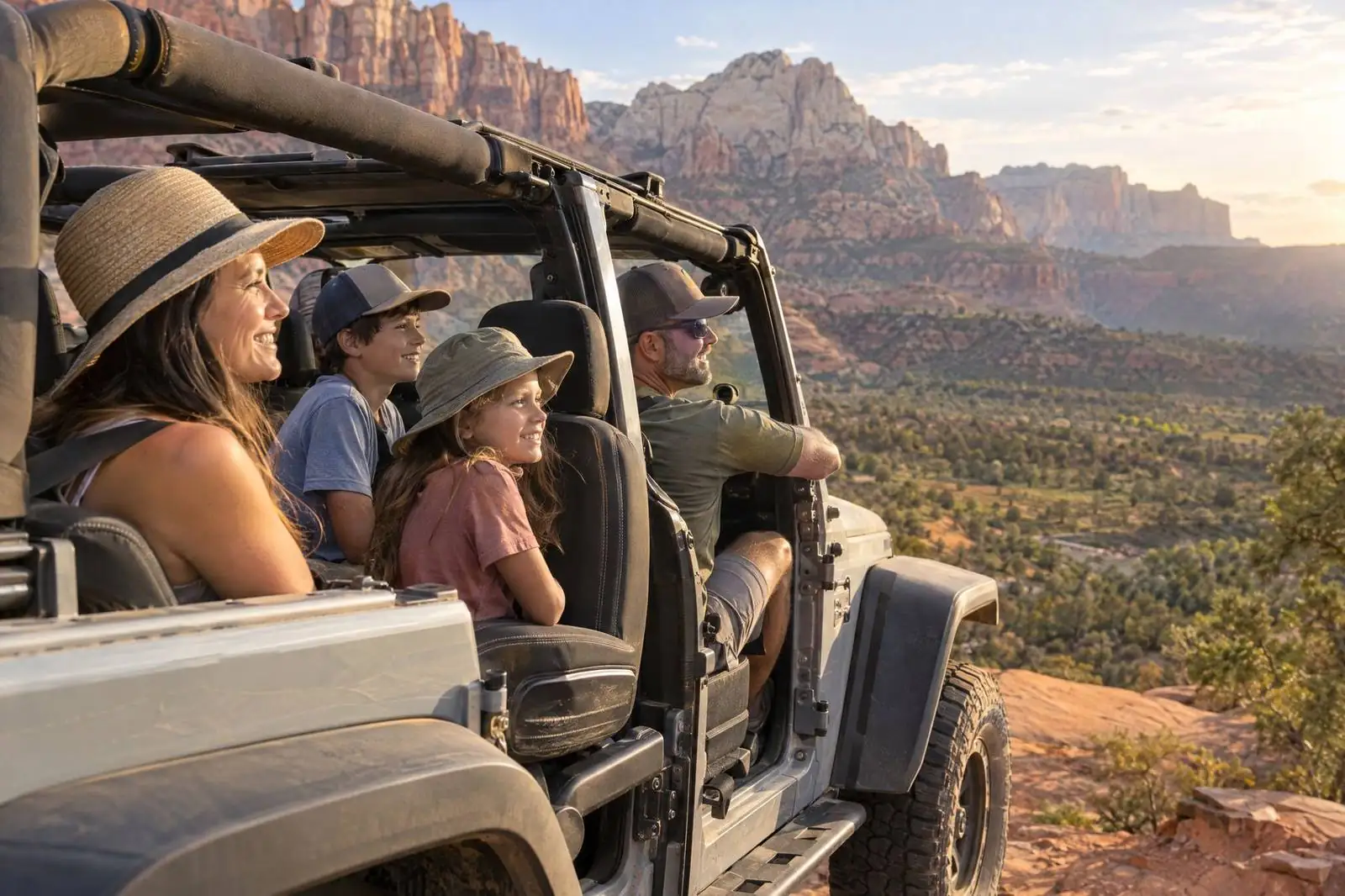
That quiet is what wildlife responds to. Animals that stay out of sight along the park corridor will stand on a ridge above a dirt road and watch a Jeep go by. The Jeeps stay outside the park boundary, which means you are looking at the same landscape from a less crowded angle. The roads themselves tell the story: washboard, cattle guards and long sight lines that let you spot movement a quarter mile out.
What You Might See
Nobody can promise an animal on a given afternoon, and any guide who does is selling you a story. What you can reasonably hope for in this country:
- Mule deer, often in small groups near the road at dawn and dusk
- Desert bighorn sheep on rocky slopes and canyon rims
- Coyotes crossing open ground, usually at a trot
- Jackrabbits, cottontails and ground squirrels
- Raptors, ravens and other birds working the thermals
- Lizards on warm rocks, and the occasional snake
The mix changes with the season and the weather. A wet spring brings more green feed and more animals down from the high ground; a dry summer pushes them toward water. Binoculars turn a dot on a ridge into a bighorn ewe with a lamb, so keep a pair in the vehicle.
The Best Hours
Dawn and dusk are the reliable windows. Animals move to feed when the light is low and the heat is manageable, and that is also when the mesa looks its best. A private tour lets you time the ride around those hours instead of fitting into someone else's schedule.
Midday in July and August is quiet. The heat pushes most animals into shade, and the ones that stay out are often too still to spot. Spring and fall are more comfortable for wildlife watching and for people, and winter brings deer down onto lower ground.
How Guides Find Animals
Guides do not rely on luck. They read tracks in the dust, scat on the road, and the way a herd of deer behaves when something else is moving nearby. They know which draw holds water after a storm and which ridge catches the morning sun.
Our team has spent years in this country. Andrew grew up in Southern Utah, Kevin has been in the area for two decades, and Richard has been guiding since 2016. That kind of time on the ground turns a drive into a search. Ben Dold, who bought the company in 2024 after years as a guide, still drives when the schedule allows and knows which mesa roads hold animals after a storm.
Ask questions as you go. A guide who knows you are interested in birds will start watching the sky, and one who knows your kid loves lizards will slow down at the right rocks.
Watching Without Disturbing
The best wildlife encounters happen when the animal does not change what it is doing. Stay in the vehicle, keep your voice down, and let the guide decide how close is close enough. A Jeep is a blind; a person standing on the road is a threat.
Do not feed anything, ever. Food habituates animals to people and makes them dangerous, especially coyotes and ravens. If an animal moves away, let it go; there will be another bend in the road. If an animal is standing on the road, the driver will stop well back and let it move off on its own.
Pets stay home. Certified service dogs can be arranged with us in advance, and no pets are allowed on the Tuweep tour. A dog on the mesa is a wildlife repellent and a liability.
Photographing Wildlife
Bring the longest lens you own, or use your phone's zoom and accept that it will be soft. The light is usually good at the hours when animals are out, so shutter speed matters more than aperture. Set a fast shutter, keep the lens steady on the door frame, and take a burst rather than one careful shot.
Turn the flash off. It does not reach the animal, and it does startle it. Dust is the other enemy; keep a microfiber cloth in your pocket and clean the lens before the shot you care about.
If wildlife is the reason for your trip, book a private Zion Jeep tour and tell us when you book. We can aim for the Outback and the Arizona Strip side, where the roads are quieter.
Frequently asked questions
Will we definitely see wildlife on a jeep tour?
No. Wildlife is never guaranteed, and any guide who promises a sighting is guessing. Dawn and dusk tours on the quieter back roads give you the best odds.
Are there dangerous animals near Zion?
Mountain lions and rattlesnakes live in this country but rarely show themselves, and staying in the vehicle at stops is the simplest precaution. Never approach or feed any animal.
Can we bring our dog on a jeep tour?
No pets are allowed on the tours. Certified service dogs can be arranged with us in advance, and no pets of any kind are allowed on the Tuweep tour.