What a Jeep Trail Actually Is
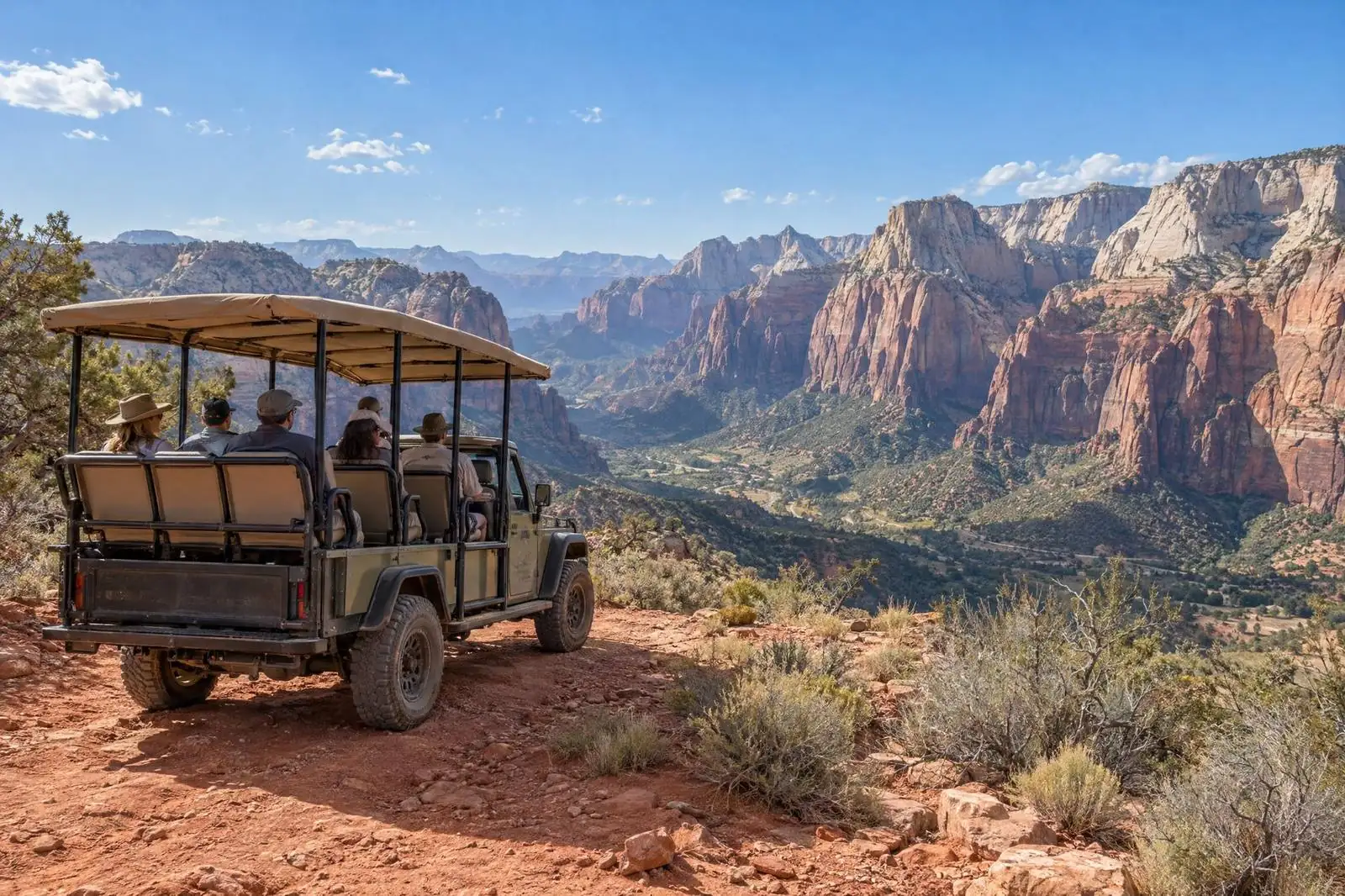
A Jeep trail is not a hiking trail. It is a two-track dirt road, often cut into sandstone or sand, that connects ranch gates, water tanks and mesa tops. Some sections are smooth; others are ledges, ruts and loose rock. The vehicle moves slowly, and the guide picks the line.
That pace is the point. You cover ground a hiker could not cover in a day, but you see it at a speed that lets you notice what is around you. A trail that looks like a scratch on the map can take an hour to drive and reward every minute.
The routes we use are outside Zion National Park, on roads that are legal for street-licensed vehicles. UTVs and OHVs are not allowed inside the park.
Some trails are graded ranch roads; others are faint tracks that only a local would find. The guide chooses based on the group and the season, and distances that look short on a map take longer than you expect, because the road follows the ground rather than the shortest line.
The Vehicle and the Ride
Our fleet seats three to eleven passengers per vehicle, and groups of up to 50 can travel in multiple Jeeps. Some vehicles are open-air and some are enclosed, and you can choose based on the weather. Seat belts are required for everyone.
Expect some bumping. The ride is not rough enough to be a thrill attraction, but it is a dirt road, and guests with back or neck problems should tell us before booking so we can choose a gentler route.
Every vehicle carries cold water, blankets and a first-aid kit, and every driver is first-aid trained. Open-air vehicles are popular in fall and spring. Enclosed Jeeps are better in winter, when the wind is cold and the dust is fine. Groups of up to 50 can be split across several vehicles, which keeps large parties together on the same route.
Reading the Land With a Guide
A guide turns a dirt road into a story. Julie has a master's degree in geology and can explain the layers you are driving over. Andrew grew up in Southern Utah, retired from the police force and served in the military, and knows the country the way locals do. Kevin has spent 20 years in the area, Richard has been guiding since 2016 and teaches fire science, and Adam rounds out the team.
They point out the difference between the Navajo sandstone on the mesa and the older layers below, the way water shapes the rock, and the plants that survive on almost no rain. None of it feels like a lecture; it comes up as you drive.
They also know the history. The ghost town on the Outback route later became a film set, and the rock art panels date back centuries. Guides explain what is known and what is still a guess.
The company was founded in 2003 as Zion Outback Safaris, and the current owner, Ben Dold, guided before he bought it in 2024. The private Zion Jeep tours follow either the west-side mesas or the Outback, and the guides carry local knowledge about closures, weather and wildlife that is hard to replace with a map.
Stops Along the Way
Stops are built into every route: photo stops, a walk to a rock art panel when conditions allow, a look at the ghost town that became a film set, a break where the view opens up. Drivers take group photos and add stops when guests ask.
Wildlife is part of the day. Deer, birds of prey and smaller desert animals cross these roads, and the guide knows where to slow down and look.
Some stops are planned; others happen when the guide sees something worth stopping for, like a herd of deer or a break in the clouds. On the Outback route, the ghost town is a highlight, and guides explain how the town became a film set.
What to Wear and Bring
Wear closed shoes with grip, bring layers and a windproof jacket, and carry sunglasses and a hat. We provide cold water and blankets, and every driver carries a first-aid kit.
Children are welcome on private tours. Kids under 8 who are under 57 inches or 40 pounds need their own child restraint, and children under 2 cannot ride on the safari truck. Call us before booking with a toddler.
Bring a bandana or buff for dust in dry weather, and a hat that stays on in the wind. Sunscreen matters even on a cloudy day at this elevation. Tell us about mobility needs when you book, and we will match the route and the vehicle to your group.
Frequently asked questions
Is the Jeep ride too bumpy?
It is a dirt road, so expect some bumping, but it is not an extreme off-road course. Tell us about back or neck problems and we will choose a gentler route.
Do I need off-road driving experience?
No. You ride with a trained guide who drives these roads regularly. All you need to do is wear a seat belt and enjoy the view.
Can kids ride on a backcountry Jeep tour?
Yes on private tours, with a child restraint for kids under 8 who are under 57 inches or 40 pounds. Children under 2 cannot ride on the safari truck; call us before booking.