The Roads Everyone Takes
Most visitors see Zion from three roads: the Zion Canyon Scenic Drive, served by the shuttle for much of the year; the Zion–Mount Carmel Highway, which climbs through the long tunnel and out the east side; and State Route 9 west through Rockville and Virgin. All three are worth driving. All three are also busy, especially in summer and on fall weekends.
The scenic drive puts you at the trailheads for the Narrows, Angels Landing and the Pa'rus Trail. The highway gives you the switchbacks and the tunnel. SR-9 west takes you past the towns where many guides, including ours, live and work.
Traffic on the highway can back up at the tunnel, where large vehicles need an escort, and the scenic drive can feel like a queue on a summer afternoon. The towns along SR-9 are small, and the drive between them takes minutes, but the view changes with every mile as the mesas rise on either side.
Where the Pavement Ends
West and south of the park, the pavement gives way to dirt. Smith Mesa and Hurricane Mesa rise above the Virgin River valley, and their tops are crossed by two-track roads that see more cattle than cars. The south end of Zion country, which we call the Outback, is open ranch land and desert with a ghost town and rock art panels. Farther south and west, the Arizona Strip runs toward the Grand Canyon.
UTVs and OHVs are not allowed inside Zion National Park. Our tours stay outside the boundary, on roads that are legal for street-licensed vehicles, with a guide who knows which ones are passable after rain.
The roads are not secret. Ranchers, hunters and locals use them, and some cross private land. A guide knows where you can go and where you cannot.
What a Dirt Road Changes
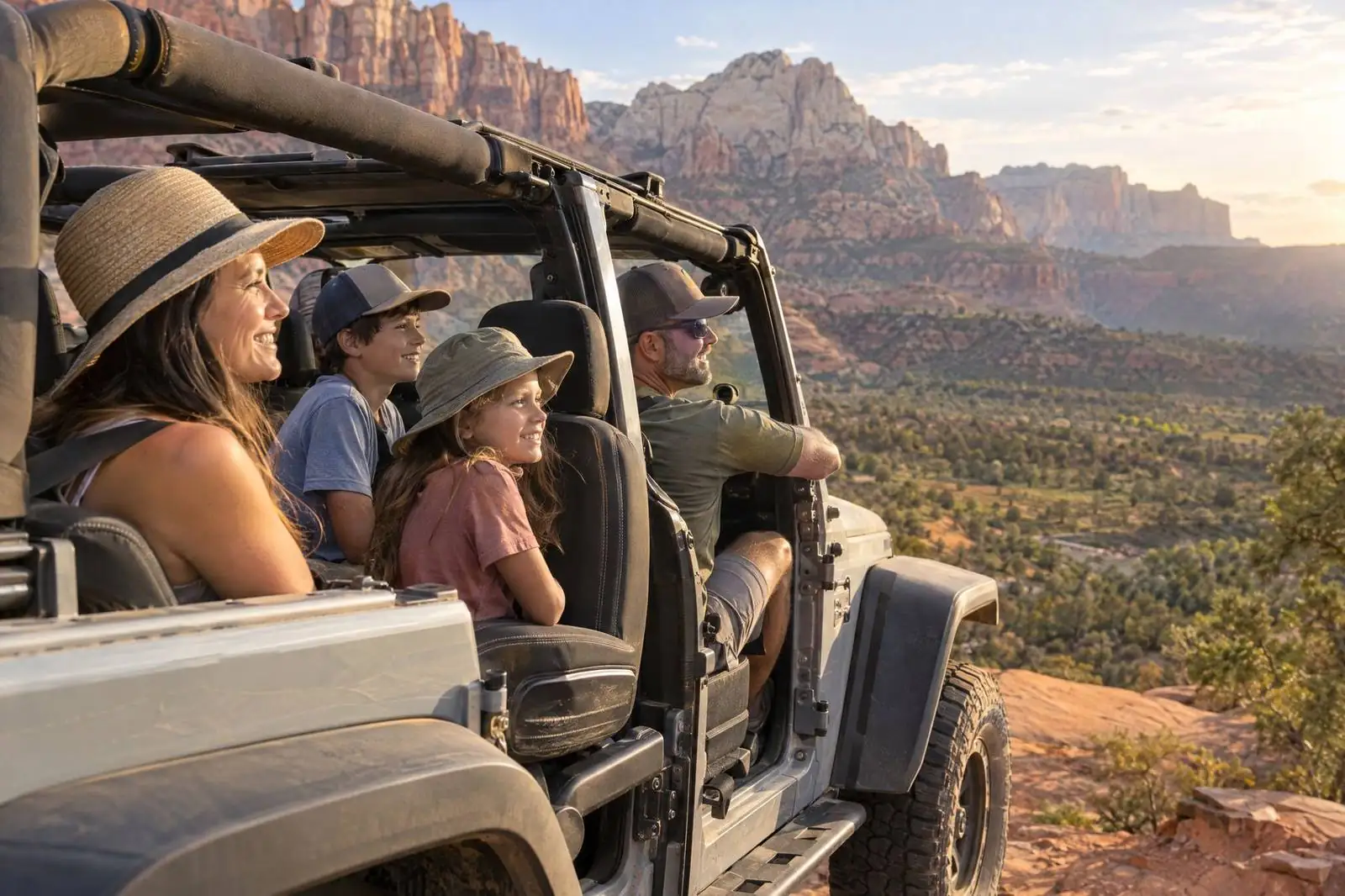
The pace drops. A dirt road asks for low gears and attention, and that slows everything down in a good way. You notice the juniper, the way the soil changes color, the tracks of animals that crossed the road before you. The views back toward Zion are long and unobstructed because nothing is built between you and the cliffs.
You also get access to things the paved roads skip: a ghost town that later became a film set, rock art panels, and ranch country that has looked much the same for generations. The noise of the highway fades within a few miles, and the wind and the engine are the only sounds.
Sound changes too. On the pavement you hear tires and engines. On the dirt you hear the vehicle, the wind and, in spring, water running in the washes.
The scale of the country also changes. From the mesa you can see the park as a whole, from the west rim to the east side, and understand how the canyon fits into the plateau.
Driving Yourself or Riding With a Guide
You can drive some of these roads in a high-clearance vehicle, but conditions change fast. A storm can leave ruts, washouts or sand that looks firm and is not. Cell service is spotty, and a wrong turn can add hours. Rental agreements often prohibit dirt-road travel, and a stuck car in the desert is an expensive way to spend an afternoon.
A guide removes those problems. Our drivers have first-aid training and kits in every vehicle, carry water and blankets, and know which routes are open. The company has run these roads since 2003, and the current owner, Ben Dold, guided before he bought it in 2024.
Guides also know the land. Julie has a master's degree in geology and can explain the layers under your wheels. Andrew grew up in Southern Utah and knows the ranches and back roads by name.
Our vehicles are street-licensed Jeeps with seat belts, and the drivers carry first-aid kits and water. On the Tuweep route, the drive is long and remote, and the guide plans fuel and timing around it.
A Day That Uses Both
The best days mix pavement and dirt. Drive the scenic highway in the morning, walk a trail, then take a private Zion Jeep tour in the afternoon and watch the light change on the cliffs from the mesa rim. Or do it in reverse: tour first, then drive east through the tunnel as the shadows lengthen.
Either way, leave time between the two. The park and the mesa country are close, but they feel like different places, and the contrast is the point.
If you are visiting in summer, do the tour first and the park second, before the heat builds. In fall, the reverse works better.
Frequently asked questions
Can I drive the mesa roads in a rental car?
Not recommended. The roads are dirt, conditions change after storms, and many rental agreements prohibit off-pavement travel. A guided 4x4 tour avoids the risk.
Do your tours go into Zion National Park?
No. Our Jeeps stay outside the park boundary on legal dirt roads around it. You see the park from the mesa rims and the south end, not from inside.
When are the dirt roads in the best condition?
Usually in dry weather, especially spring and fall. The monsoon runs July through September, and heavy rain can close or limit dirt roads.