Why the West Side Catches the Light
Zion's west wall faces east, which means it catches the morning sun and, in the late afternoon, the low light that comes across the plateau from the west. From the mesa tops on that side, you watch the cliffs turn from pale cream to orange to deep rose as the sun drops. The canyon floor goes blue and then dark while the upper walls are still lit.
You cannot see this from inside the park, because there is no road along the western rim. The view exists because the mesas rise above the valley and look across at the park boundary.
The effect is strongest on clear evenings after a storm, when the air is clean and the rock holds color longer.
The same geometry explains why sunrise on the east side is different. The east wall faces west, so it catches the evening light directly and the morning light indirectly. Photographers plan around this.
A Golden Hour Tour, Step by Step
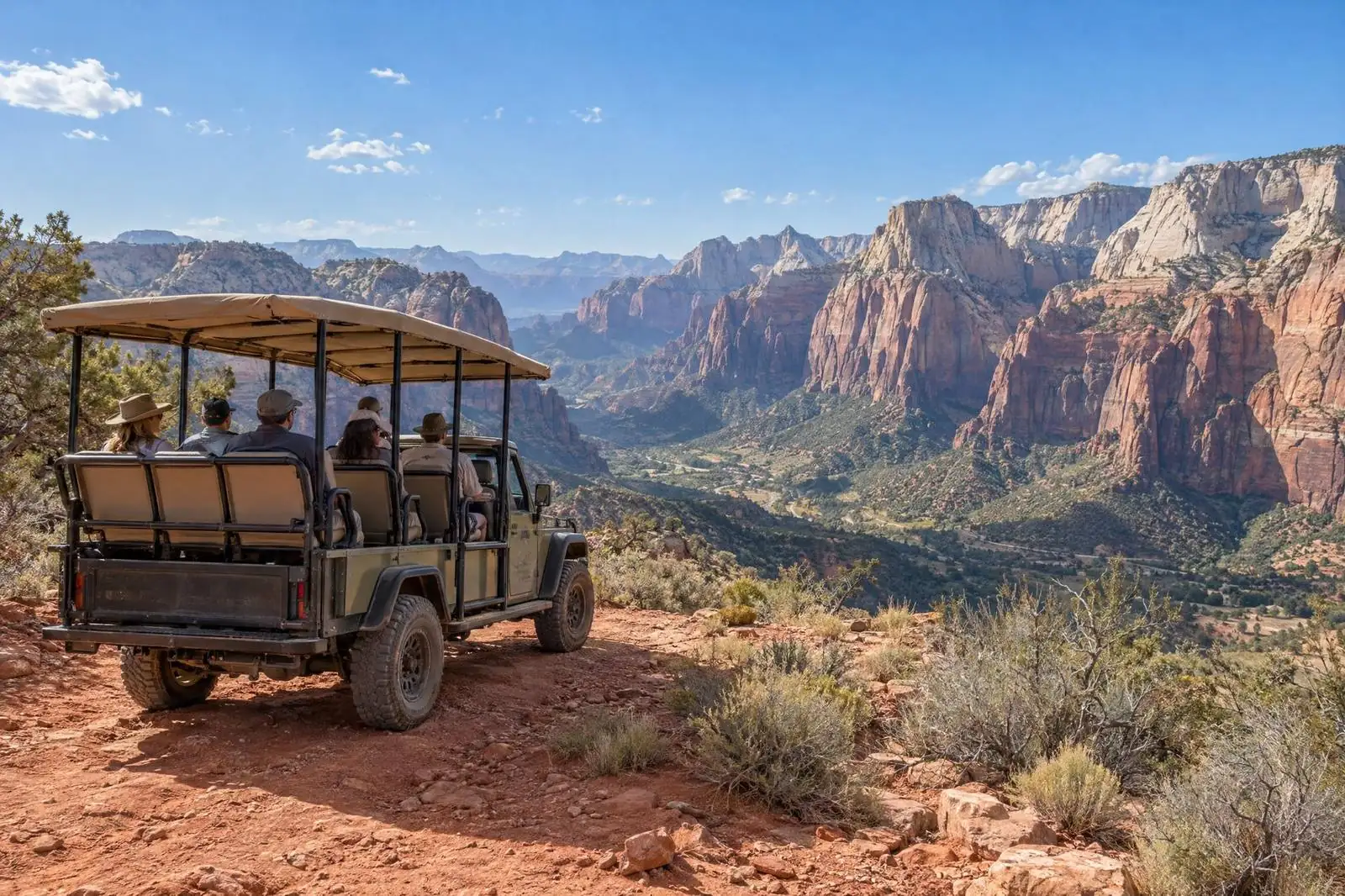
On a private tour, we time the pickup so that you are on the mesa an hour before sunset. The climb takes you past the last houses in Virgin and onto Smith Mesa, where the road turns to dirt. The guide picks a stop with a clear line of sight to the cliffs and sets out chairs if you want to sit.
From there, the light does the work. Guides take group photos, answer questions about the formations and point out landmarks as the color changes. Blankets come out as the temperature drops, and the ride back is usually quiet, in the best way.
If you want a specific spot for a proposal or a photo, tell us when you book. The guides know which rim gives the cleanest background.
The route is flexible. If the wind is strong on one rim, the guide moves to a sheltered spot. If the clouds are interesting, the guide finds a stop with more sky. Groups of up to 50 can be split across multiple vehicles, so a large party can watch the same sunset together.
Photographing the Last Light
Golden hour is forgiving for phones and demanding for cameras, in different ways. The light is warm and low, so exposure is easy, but the contrast between lit rock and shadowed canyon is high. Meter for the cliffs and let the canyon go dark, or bracket your shots and blend later.
Use the foreground: a juniper branch, a rock edge, the curve of the dirt road. A telephoto lens compresses the cliffs and shows the layers; a wide lens shows the scale. Keep the camera steady, and stay long enough for the afterglow, which often outlasts the sunset.
Turn off the flash. It will not reach the cliffs, and it will ruin the color in the foreground. Shoot in bursts when the light is changing fast, and check the histogram rather than the screen. The screen makes a bright sky look brighter than it is.
Staying for the Stars
When the last color leaves the cliffs, the sky takes over. Our night sky tour climbs above 5,000 feet, sets up folding recliner chairs, and brings a telescope and binoculars. Guides talk about what you are seeing and how to find your way around the sky. Zion is an International Dark Sky Park, and the mesa is far enough from town that the Milky Way is often visible.
We do not promise specific planets, constellations or clear skies. Weather moves, and the sky does what it does. What we can promise is a dark site, comfortable chairs and a guide who knows the sky.
The tour lasts two hours, and the guide sets up the chairs where the view is open. Bring a warm hat; the temperature drops quickly once the sun is gone. Binoculars are useful before the sky is fully dark, when the last light is still on the cliffs.
Timing and Clothing
Sunset times shift through the year, so we set departure based on your date. In fall and winter, golden hour comes early and the temperature drops fast after the sun is gone. In summer, the light lasts longer but the mesa is warm until well after sunset.
Bring a jacket, even in summer, and wear closed shoes. If you want to combine the two tours, book the private Zion Jeep tour for sunset and the night sky tour for after dark.
If you are booking in winter, expect an early departure and cold air. In summer, the tour ends late, and the drive back to town is dark.
Frequently asked questions
Can I watch sunset inside Zion National Park?
Yes, but popular viewpoints are crowded and the shuttle schedule may limit your timing. Our tours watch the sunset from the mesa rims west of the park, where the whole west wall is in view.
Do you offer sunset tours?
Yes. Private tours can be timed to put you on the mesa before sunset, and the night sky tour continues after dark.
Is it cold after sunset on the mesa?
Yes, even in summer. Temperatures drop quickly once the sun is gone, and the mesa is higher and windier than town. Bring a jacket; we carry blankets in every vehicle.