
Rain Is Normal Here, Especially in Late Summer
Zion does not have a rainy season the way Seattle does. It has storms that arrive, dump water on the sandstone, and move on. The wettest stretch is monsoon season, roughly July through September, when warm, moist air from the south builds afternoon thunderstorms over the mesas and canyons.
That pattern matters for planning. A June morning is usually clear and hot; an August afternoon can turn dark in an hour. If your trip falls in late summer, front-load outdoor plans and keep a flexible afternoon.
Rain also changes the ground. Sandstone sheds water quickly, dirt roads turn slick, and slot canyons become dangerous long before the storm reaches you. The key is knowing which plans survive a shower and which ones should wait.
Take a Jeep Tour Anyway
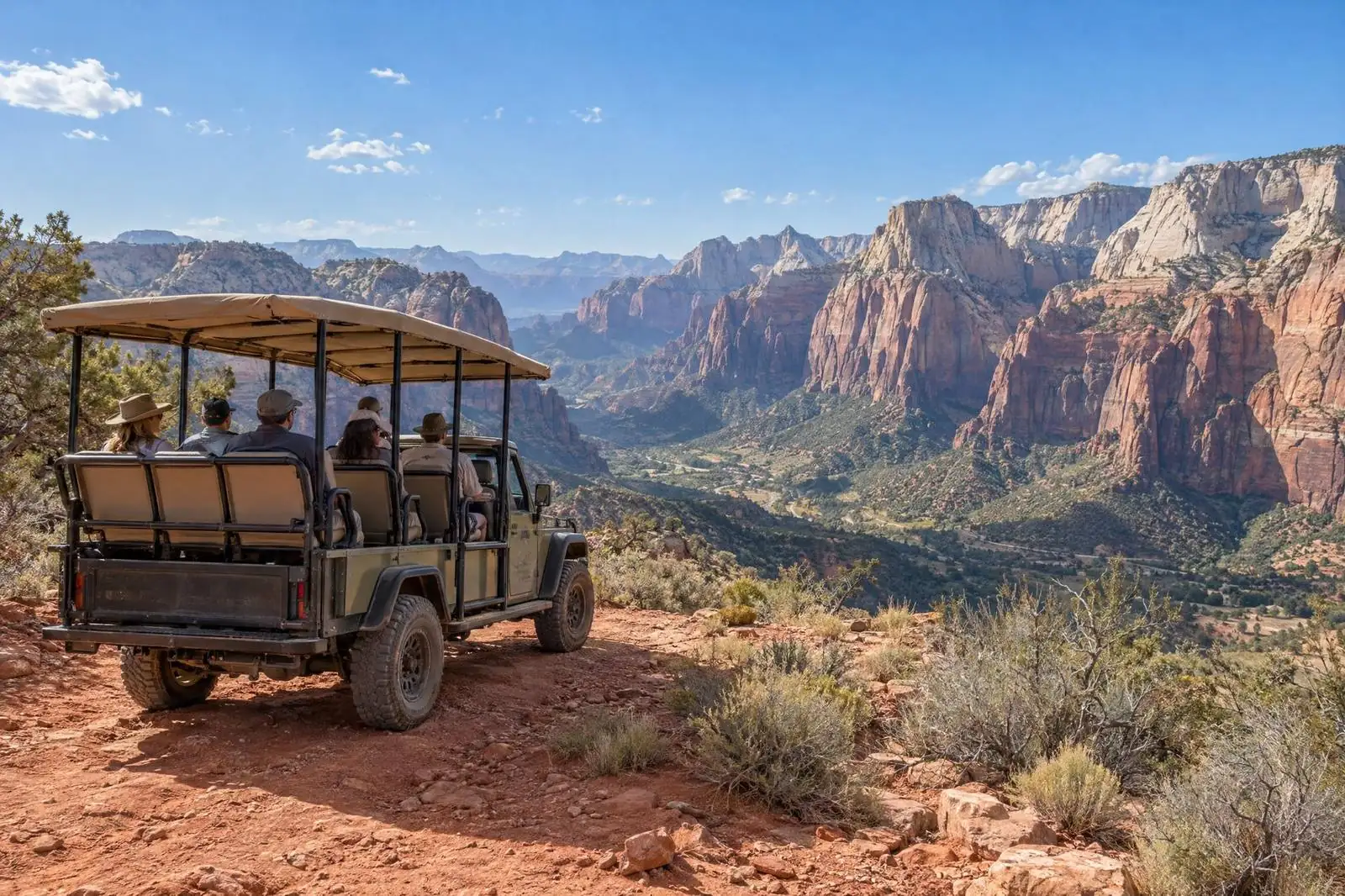
Mild rain does not cancel a tour. Cloud cover often improves the view, softening the cliffs and pulling shadows across the mesas. Photographers tend to prefer it. The air smells like wet sage, and the temperature drops enough to make an open-air ride comfortable in months when it otherwise would not be.
Private tours offer both open-air and enclosed Jeeps, so you can choose based on the forecast. A private Zion Jeep tour also lets you adjust the route mid-day, and pickup is available anywhere in Springdale, Rockville or Virgin. Blankets are carried in every vehicle and cold water is provided.
Heavy rain is different. It can make dirt roads unsafe, and we notify guests a few hours before departure if the route needs to change. Monsoon storms count as heavy rain more often than not.
Drive the Zion-Mount Carmel Highway
If you have a car and the roads are open, the Zion-Mount Carmel Highway is one of the best rainy-day drives in the region. The road climbs out of the canyon through switchbacks and a long tunnel, with pullouts that look back at wet cliffs and low clouds caught on the rock.
The Canyon Overlook Trail begins near the east end of the tunnel. It is short, but the rock can be slick in rain, and the drop-offs are real. Wear shoes with grip and turn around if the surface feels greasy.
Check park conditions before you go. Rain can close sections of the scenic drive, and the shuttle still runs much of the year, so plan around the park's schedule rather than yours.
Spend the Afternoon Indoors
Springdale sits at the park's south entrance and is built for wet afternoons. Galleries, outfitters, coffee shops and restaurants line the main road, and a long lunch is a reasonable way to wait out a storm. Virgin is about 15 minutes west on State Route 9, with Balcony One Restaurant at 770 W State Route 9 serving as the departure point for our shared tours.
Inside the park, the visitor center and the Zion Human History Museum give you context on the geology, wildlife and human story of the canyon. Both are good places to spend an hour when the trail you wanted is closed.
If you are traveling with children, treat the rain as a schedule change rather than a cancellation. A museum, a warm meal and a short drive often work better than forcing a hike in bad conditions.
Know When to Change the Plan
Flash floods are the real risk in Zion, not wet clothes. Slot canyons and narrow drainages can fill with water from a storm miles away, and the sky above you may still be blue. The Narrows is the classic example: beautiful in dry weather, dangerous when the river rises.
Check the forecast each morning and heed park closures. If rain is heavy or persistent, skip narrow canyons and low drainages. The mesa country around the park drains differently, but dirt roads there have their own limits.
Our cancellation policy gives you room to adapt: cancel at least 48 hours ahead and you receive a full refund. For a storm that arrives overnight, call us and we will tell you what is running.
A Workable Rainy-Day Schedule
Start with the weather radar and the park's road status. If the morning is wet but the afternoon looks clearer, spend the morning at the museum or in Springdale and book an afternoon Jeep tour. If the storm is settling in, shift to the scenic drive and a long lunch, then try again the next day.
Dress in layers and bring a rain shell rather than an umbrella; wind on the mesas makes umbrellas useless. Temperatures drop roughly 10°F for every 1,000 feet of elevation, so the mesa tops can feel like a different season from the valley floor.
Rain rarely lasts all day in Southern Utah. Plan for it, keep one indoor option in your back pocket, and you will see a side of Zion that most visitors miss: wet rock, moving clouds and a canyon that smells alive.
Frequently asked questions
Do Zion Jeep Tours run in the rain?
Yes, mild rain does not cancel a tour. Heavy rain can limit travel on dirt roads, and we notify guests a few hours before departure if the route needs to change.
What should we do near Zion on a rainy day with kids?
The visitor center and Zion Human History Museum are good indoor stops, and Springdale has restaurants and shops within walking distance of the park entrance. A short scenic drive works well if roads are open.
Is it safe to hike The Narrows when it rains?
No. The Narrows and other slot canyons are prone to flash floods, which can arrive from storms miles away. Check the forecast and park alerts, and choose a different plan when rain is in the area.