Start With the Sky
Zion National Park is an International Dark Sky Park, and that designation is the main reason to stay up late here. Once the sun drops behind the west rim, the canyon goes dark fast, and the stars come out in layers.
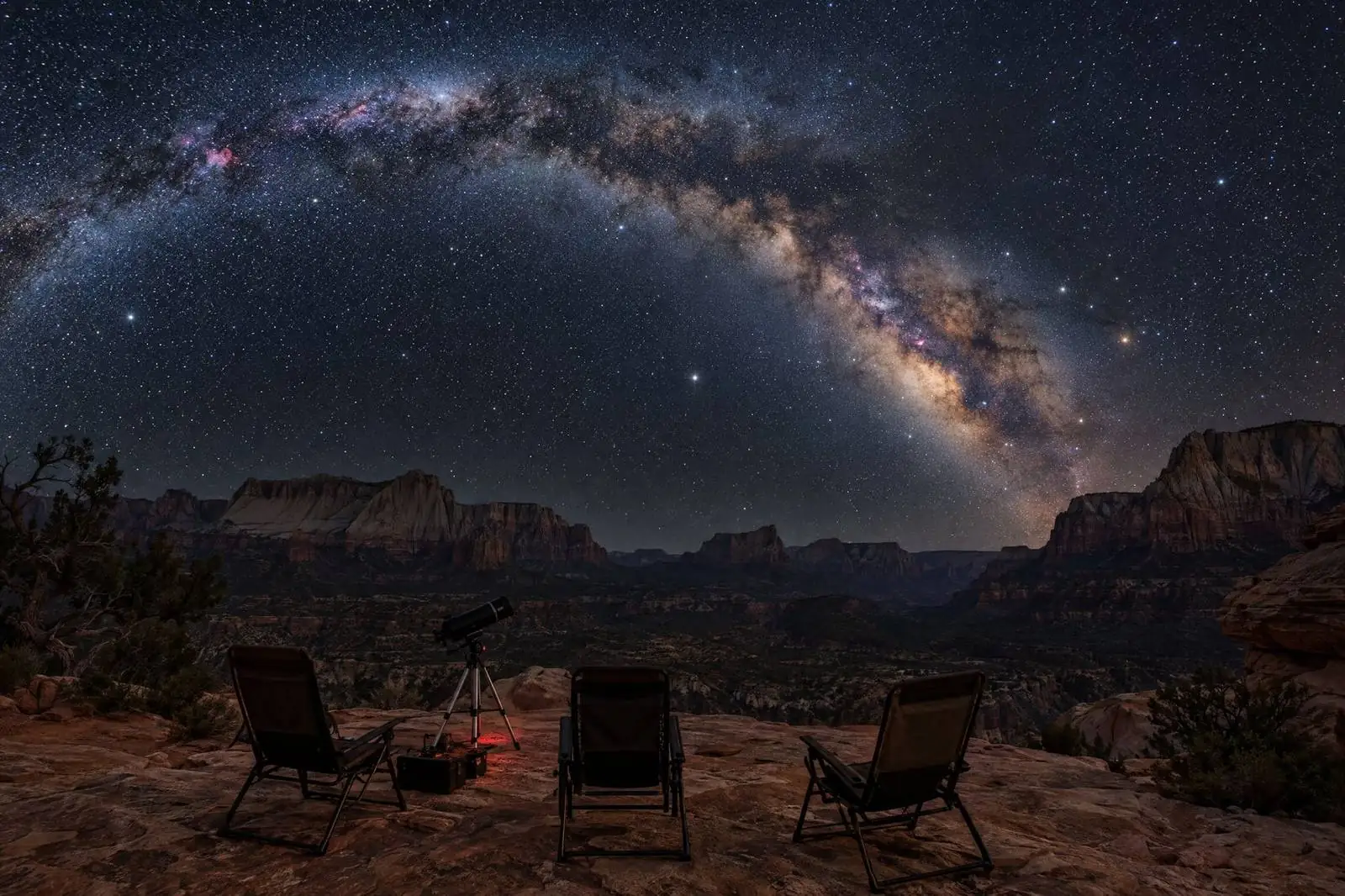
You do not need equipment to enjoy it. Find a spot away from porch lights and parking lots, give your eyes 20 minutes to adjust, and look up. The further you get from Springdale's glow, the more the Milky Way shows itself, especially in the week around the new moon.
What you will not find is a ranger-led star program every night or a guaranteed view. Clouds move through, and the best nights are the ones you plan around the moon rather than the calendar. An entrance pass covers the park for a week, so a night drive costs nothing extra once you are in.
Take a Night Sky Jeep Tour
If you want the dark sky without hunting for a pullout in the dark, the easiest option is a guided ride. Our Night Sky Tour leaves Balcony One Restaurant in Virgin, climbs the mesas west of the park, and parks above 5,000 feet for two hours of stargazing.
Folding recliner chairs, a telescope, binoculars, blankets and cold water come along. Your guide points out what is visible that night and helps you use the optics. The tour runs from $100 per person, and the Jeeps stay outside the park boundary, looking toward Zion's cliffs rather than driving into the canyon.
That outside-the-park position is the point. From the mesa you get a wide horizon instead of canyon walls, and the lights of Virgin fall away below you as you climb.
Details and booking are on the Night Sky Tour page.
Drive the Zion–Mount Carmel Highway at Dusk
The Zion–Mount Carmel Highway climbs out of the canyon through switchbacks and a tunnel just over a mile long, and it is one of the few park roads you can drive yourself after dark. Traffic thins out in the evening, and the pullouts along the east side give you a place to watch the last light fade.
Two cautions. The park shuttle does not run at night, so plan your day around its schedule rather than expecting a ride back. And wildlife moves at dusk, especially deer, so keep your speed down and your eyes on the shoulders.
You still need a park entrance pass, and the tunnel has size restrictions that matter if you are driving anything larger than a standard vehicle. If you are towing a trailer or driving a tall van, check the limits before you commit to the route.
Walk the Pa'rus Trail in the Evening
The Pa'rus Trail is paved, mostly flat and close to Springdale, which makes it the best evening walk in the park for families and anyone who wants an easy couple of miles before dinner. It follows the Virgin River and connects the visitor center area with Canyon Junction.
Go before full dark. The trail is shared with cyclists, and the last light on the Watchman is the reason to time your walk for sunset rather than after it. Bring a headlamp for the walk back, and keep an eye on the river; water levels rise fast during monsoon storms.
If you have small children, this is also the easiest place to introduce them to the idea that the desert changes after sunset. The temperature drops, the birds quiet down, and the first stars appear while you are still on flat ground.
Eat Late in Springdale or Virgin
Springdale's main street has the highest concentration of restaurants near the park, and several keep their kitchens open past the dinner rush in season. Virgin, 15 minutes west on SR-9, is quieter, and Balcony One Restaurant is where our night tour meets.
If you are taking the night tour, eat before you go. The mesa is cold and the tour ends late, and a full stomach makes the ride down a lot more pleasant. If you are staying in Springdale, walk back to your room after dinner and look up; the canyon walls frame a surprising amount of sky.
In winter, kitchens close earlier and some places take a break between seasons. Check hours before you build an evening around a late dinner, and keep a backup plan in Virgin.
What to Skip After Dark
Some Zion experiences do not belong on a night list. The Narrows and other slot canyons are dangerous after dark and during monsoon season, when flash floods can arrive with no rain overhead. Angels Landing needs a permit and has exposed sections that are hard enough in daylight.
UTVs and OHVs are not allowed inside Zion National Park at any hour, so leave the side-by-side at home. And if a storm is building in July, August or September, skip the dirt roads and check with your guide before heading out; heavy rain can close them quickly.
What is left is a good evening: a sunset walk, a late dinner, and a dark sky that most visitors never stay awake to see. For the stargazing version, call (435) 668-3756 or look at the night tour details.
Frequently asked questions
Is Zion National Park open at night?
Yes, the park is generally open around the clock, and an entrance pass is required. The canyon shuttle does not run overnight, so plan your evening around driving yourself or staying near the south entrance.
Where is the best place to see the Milky Way near Zion?
Any dark spot away from town lights works, and the week around the new moon gives the darkest sky. The mesas west of Virgin, where our night tour goes, sit above 5,000 feet and away from Springdale's glow.
Do I need to book the night sky tour in advance?
Booking ahead is the safest plan, especially in summer and on weekends. Call (435) 668-3756 to check availability, and remember that cancellations made at least 48 hours ahead receive a full refund.